Among mechanical traps, which have the longest history of all trap types, the first to be developed was the bucket trap, which is relatively simple to mass produce. In the bucket traps most commonly used at the beginning, the bucket faced upward (‘open bucket’) and did not have an attached lever to control the opening and closing of the valve. Instead, most were large traps in which the bucket itself floated up or down to open and close the valve. However, this type of trap soon fell out of use. In contrast, a style of bucket trap in which the bucket was attached to a lever was more widely used. This more compact type of bucket trap, in which the bucket faces downward (‘closed bucket’), is still in use today.
Float type traps contain a tightly sealing buoyancy device (float), but the appearance of the float trap had to wait until the processing technology necessary to manufacture the floats was developed. This happened in the years following the appearance of the bucket type trap. As condensate is continually discharged from a float type trap, leaving none to accumulate in the steam process, and the service life of a float trap is relatively long, this type of trap is in the mainstream of traps used today on equipment that requires large discharge capacities.
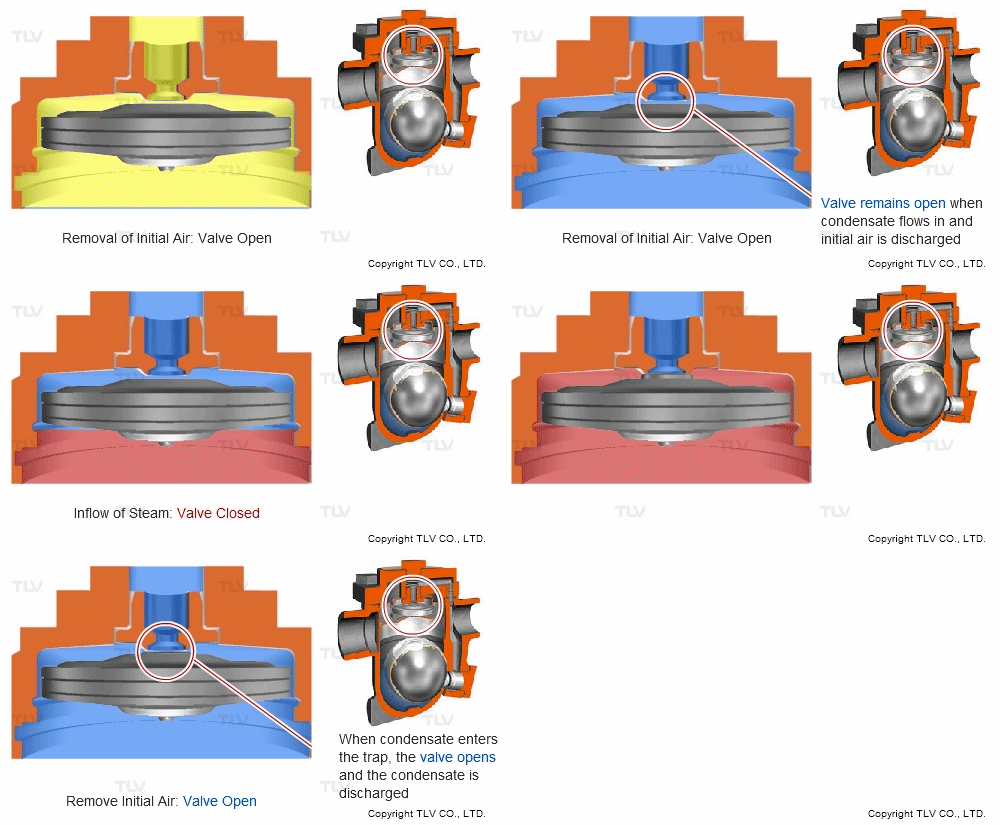
Automatic Air Venting using an X-Element
The three types of steam traps discussed above are still in use today just as described, but what kind of evolution are these modern-day traps undergoing? The evolution of each type of trap focuses on further improving the special features of that particular type of trap.
For example, many of the traps in use today feature an automatic air vent to automatically discharge the initial air at start-up. This feature achieves the aim of reducing both start-up times and the labor involved in valve operation. There are also models of traps for use on equipment that are equipped with high performance automatic air vents to remove hot air during operation.
From the standpoint of ease of use, a model has also been developed that has a scale removal function to allow clogs to be removed without the need for disassembly. This feature has made it possible to clear clogs and restore normal operation right then and there as the clogs are found in the course of daily inspections, rather than needing to schedule later disassembly repairs or trap replacements.